
Medical Miracle
and Other Surprisingly Simple Habits with "Miraculous" Results

OK, last side story from the Super Bowl. Derick Hall was “born dead” at 23 weeks. Fast forward, he just played in the Super Bowl… and had 2 sacks! Beyond being born prematurely, he had a brain bleed among multiple other major health problems. ESPN featured his story previously, and you can watch (roughly 5 min) it here. Not only a medical miracle but also proof that it takes a village to raise children! We all have opportunities every day to influence patients, athletes, neighbors and families.

We’re nearly halfway through February and Spring is nearly within reach. If you’re feeling any of those “Winter Blues” perhaps you need to reach for this “anti-depressant”. Resistance training “significantly reduced depressive symptoms” compared to control groups with benefits found in all groups regardless of age, program or training dose. This from a 2025 meta-analysis from Frontiers in Psychology. Pretty simple. Feeling down? Lift some stuff!!!
It came up again this week with a few different people. “I hurt my back. I’m just laying in bed or on the couch a couple of days.” Old medicine might have supported that theory but I am not certain. New medicine shows that walking rather than laying down is actually one of the best “medicines” for LBP. In this large sample study from last year, chronic low back pain was inversely related to walking duration. The summary was basically, walk more, hurt less. I hear you, “but Justin, what about acute low back pain?” In this study, a bit older I admit, showed that not only is walking good for acute low back pain but walking FASTER is effective at reducing low back pain. I feel justified by prescribing walks as warm-ups for patients. Walk on!
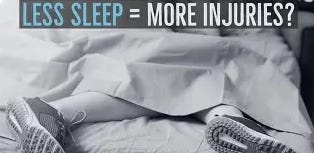
Rarely does a week go by when I’m not having a discussion with a parent about the rise in injuries among youth today. I think the cause is multifactorial, but the end result is that we are seeing more and more musculoskeletal injuries in youth. Maybe it’s from over-training. Maybe it’s from under-training. What about the other factors like nutrition and SLEEP. I’m not a huge fan of studies where results are from “self-reports” but in this case I think it’s still worth reading. The takeaway from this study is that when sleep is down, injuries go up. This is worth the ask of your kids, your patients and your athletes. How much sleep are you getting????